
Desalination
Desalination is the process of removing the saline fraction from water containing salt (typically seawater) in order to obtain water with a low salt content. The water is then often used for drinking, industrial purposes, or as cooling water.
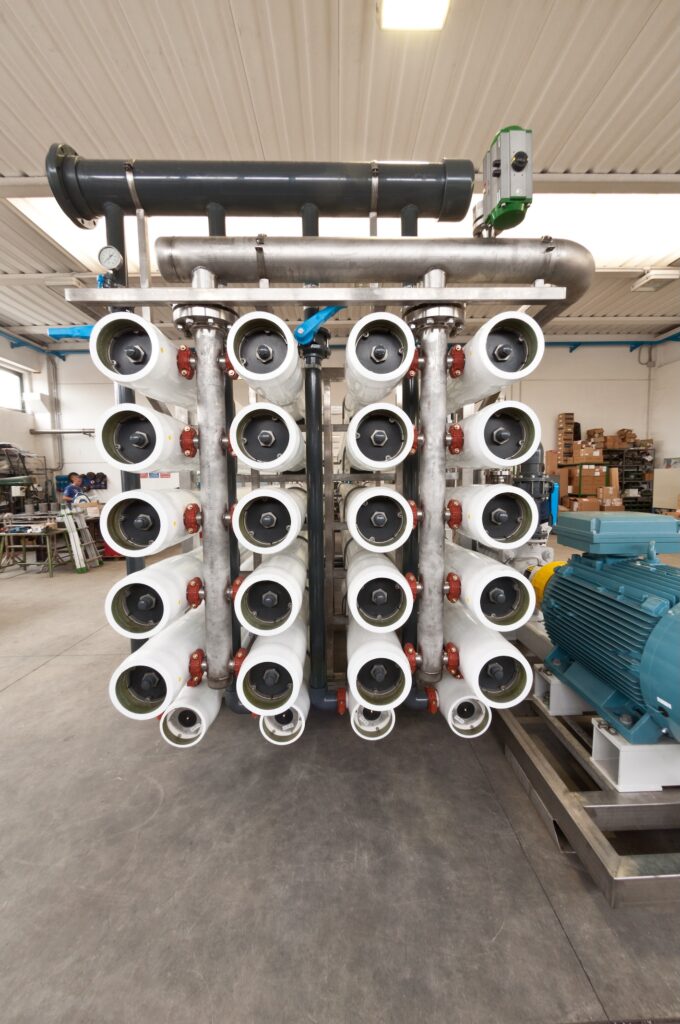
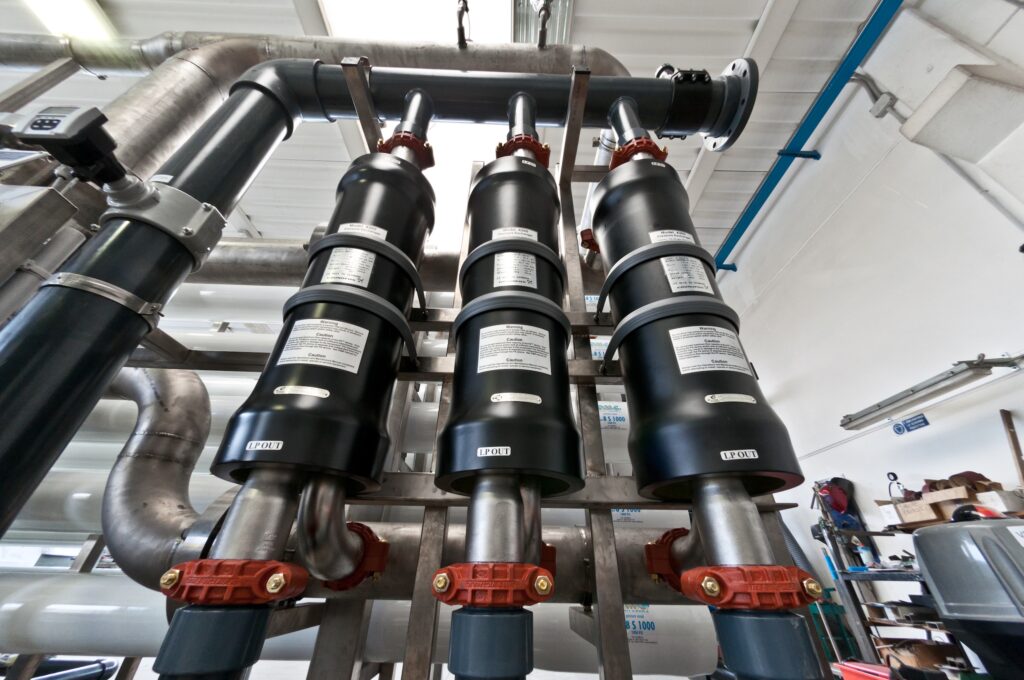
This process occurs primarily through reverse osmosis (pressure membranes): by utilizing high pressure, the fluid with a higher solute concentration is “forced” to pass through the semi-permeable membrane. The latter, however, does not allow the solute to pass, thereby separating it from the fluid. The result, therefore, is no longer two liquid solutions balanced in salt concentration; instead, there will be two fluids completely unbalanced in solute content.
In the case of marine desalination plants, the solvent is represented by seawater and the solute by salt. Thanks to reverse osmosis and osmotic membranes, the salt is separated from the water, making it completely free of mineral salts and therefore potable. Furthermore, osmotic membranes are also able to retain all micro-particles contained in the water, such as bacteria and microplastics, effectively making it safe to drink.

