STORMWATER TREATMENT
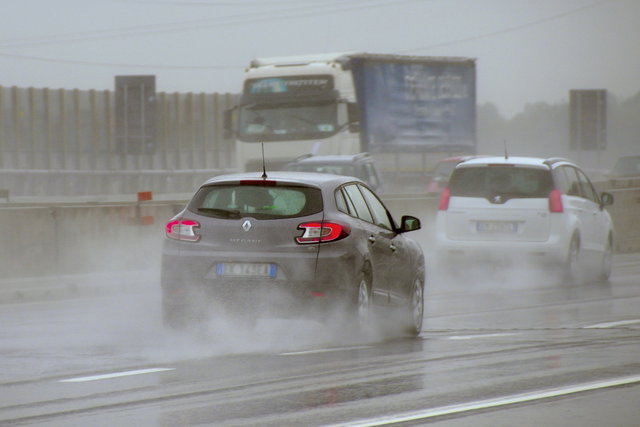
With the enactment of Legislative Decree No. 152/99 and subsequent amendments and additions, provisions have been established regarding the protection of water from pollution. It is evident that the accumulation of pollutants during dry periods and their washing by rain can reach significant levels on surfaces affected by vehicular traffic, vehicle parking, fuel refueling, etc. In this case, the transport of pollutants into sewer systems and their direct discharge into receiving water bodies can cause considerable environmental damage. Stormwater must therefore be treated before being discharged. Treatment of only the first flush (in “continuous” or “discontinuous” mode) may be provided, or treatment of the entire stormwater flow in continuous mode. Often the “discontinuous” solution is preferred to avoid subjecting the water network to hydraulic and pollutant load peaks resulting from precipitation.
OBJECTIVES AND CHARACTERISTICS OF TREATMENT SYSTEMS
Hydraulic management projects for rainwater from large surfaces discharging into surface water bodies or onto the soil generally require that the rainwater be treated (or collected and treated) before being conveyed to the discharge point.
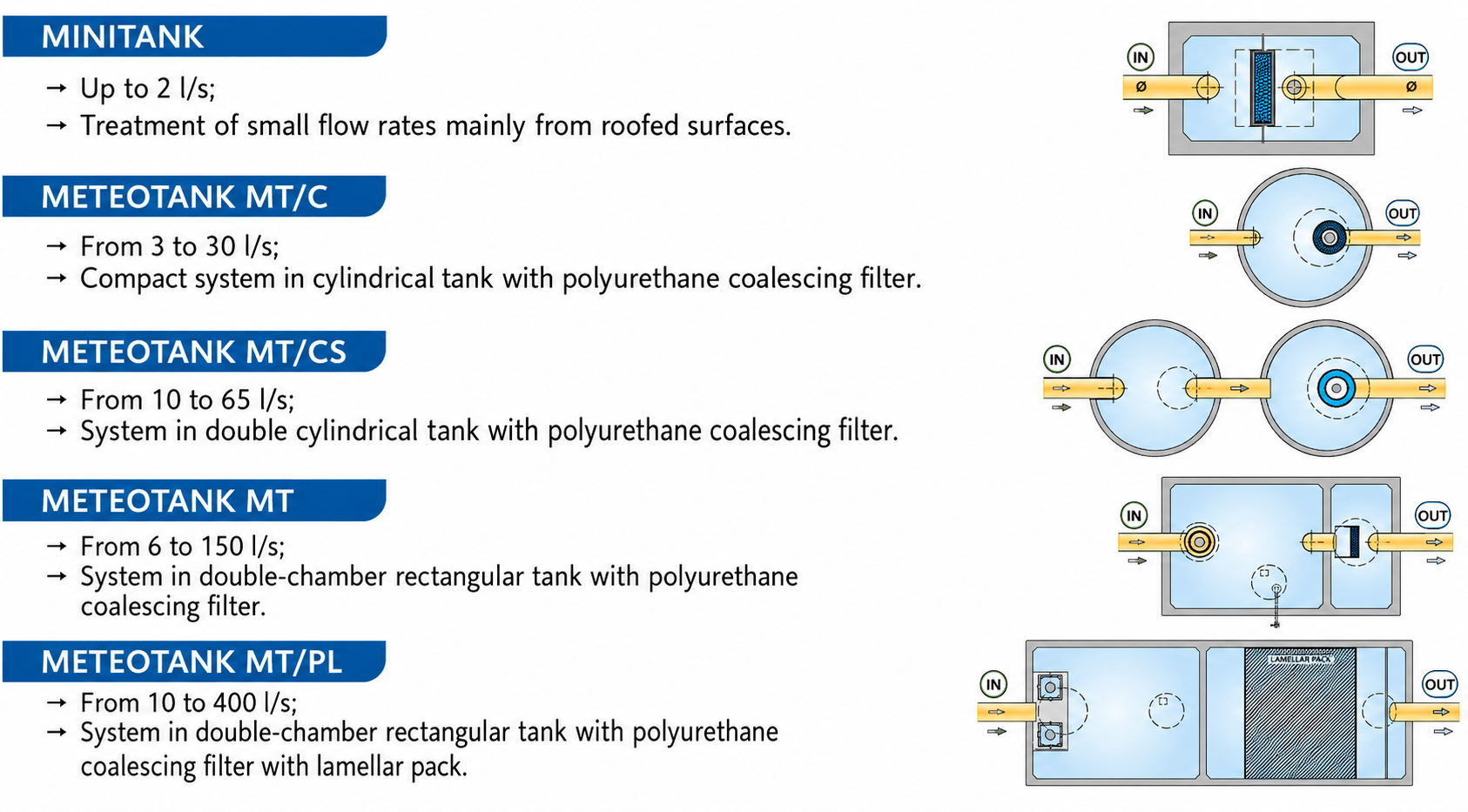
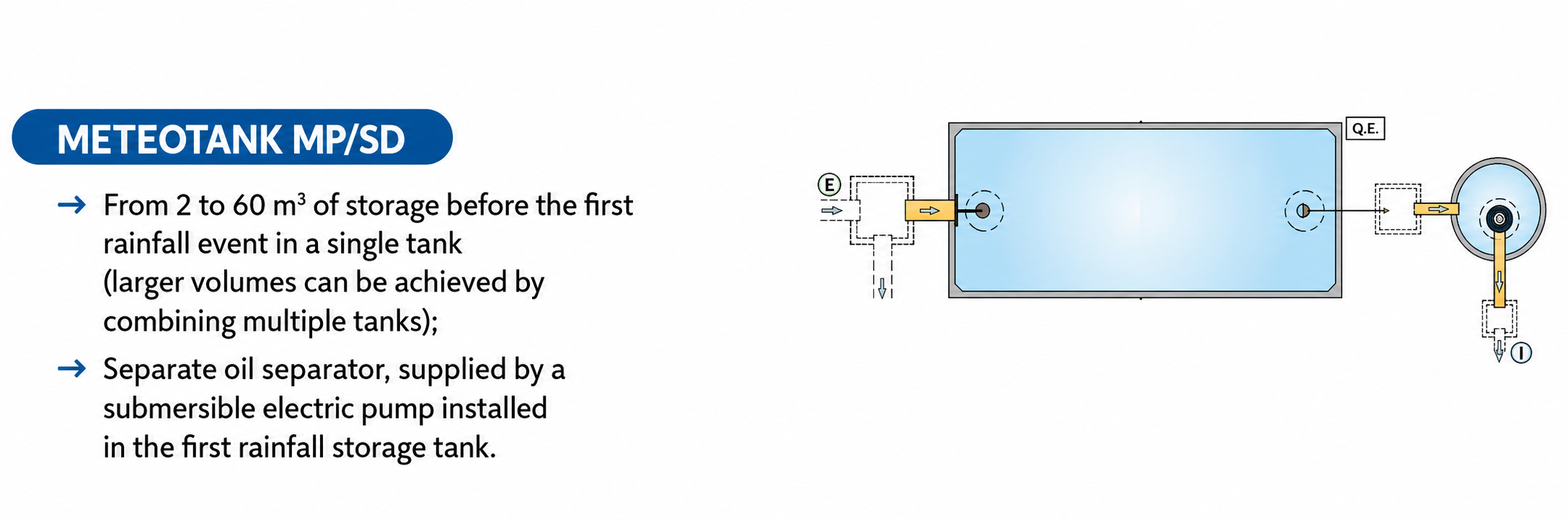
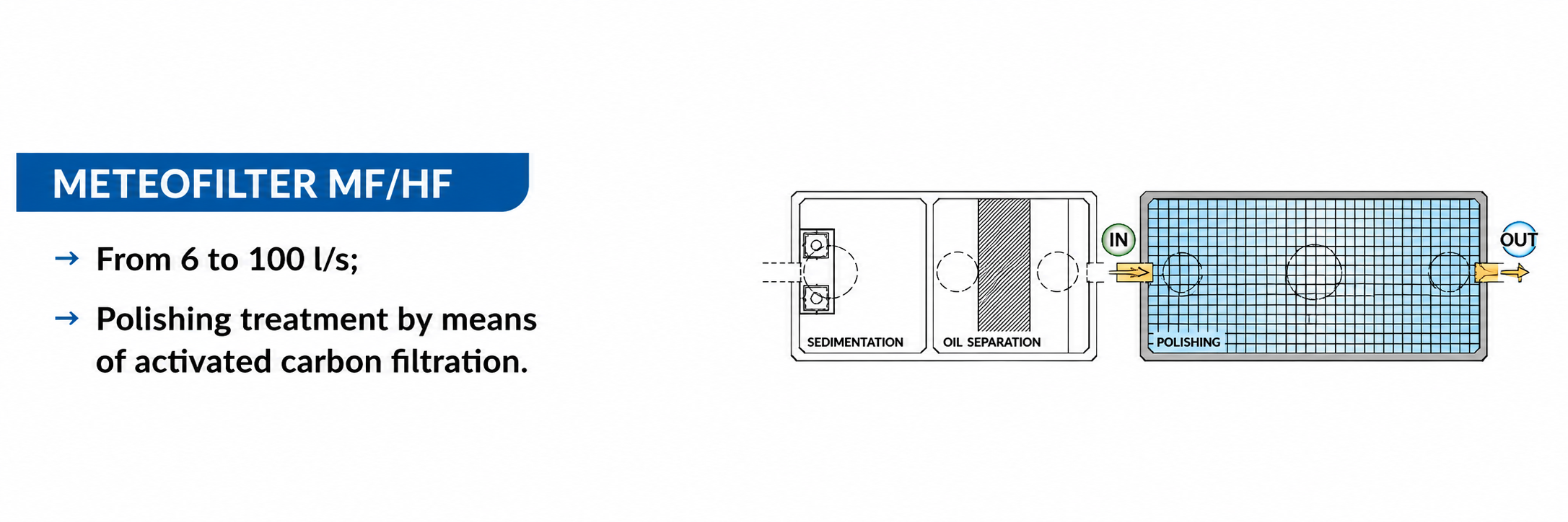
Typically, treatment is provided only for the first flush (in “continuous” or “discontinuous” mode), with adequate sedimentation and separation of oils and light liquids through the use of specific systems made with reinforced concrete tanks.
The “discontinuous” solution is often preferred to protect the water network from hydraulic and pollutant load peaks resulting from precipitation.